

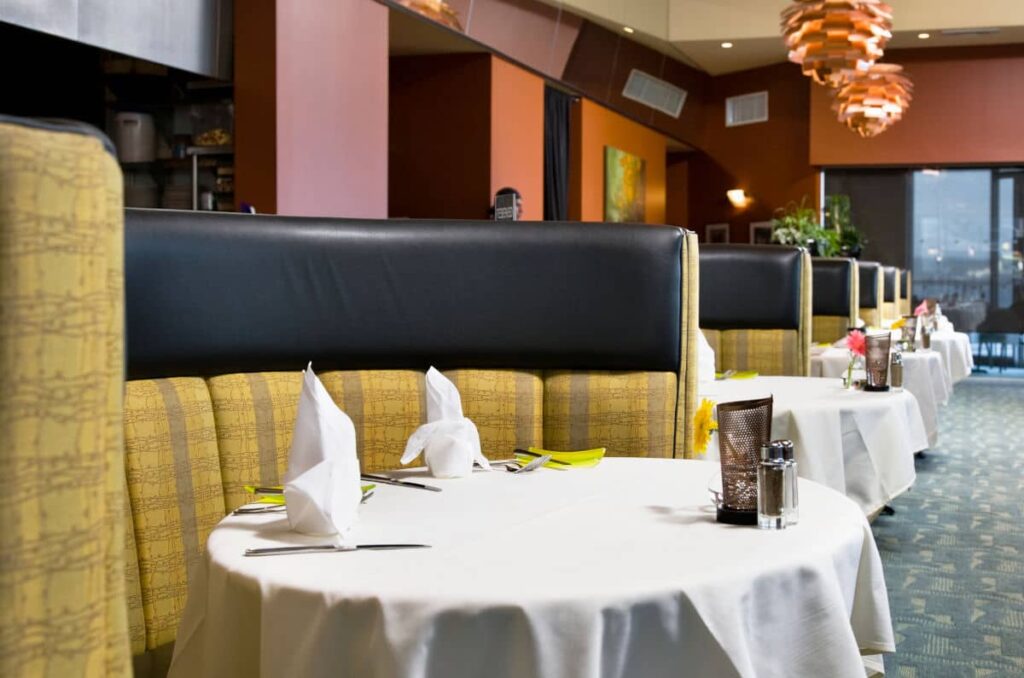
The COVID-19 pandemic has transformed society and everyday activities, which have been curtailed by the constraints of the virus’s spread. Restricted capacity, social distancing and health protocols are now part of an everyday reality that hits the hospitality sector hard.
For a while, venues were closed, froze their activity and adapted to the circumstances by seeking profitability in new lines of business such as take away or delivery. All in all, the health crisis has become an opportunity to implement simple strategies in the restaurant trade and to digitalise business models that are starting to see technology as a friend rather than an enemy.
With a view to finding short-term solutions, below we take a snapshot of the HORECA sector (HOtels, REstaurants and CAfés) and then set out some of the strategies needed to adapt businesses to the digital world.
Where are we now?
Uncertainty has left restaurant businesses vulnerable, and this has marked a turning point, because management models that used to work have become obsolete. In addition, new players have appeared, and reality has forced businesses to adjust their protocols in terms of resources as well as health and control measures (costs and liquidity). Finally, it is worth stressing that this is the ideal moment to explore what digitalisation can offer restaurants, to add value and “weather the storm” as well as possible.
At this point it is necessary to analyse the company’s situation, look at its weaknesses and strengths (what is known as a SWOT analysis) and review its MVV (Mission, Vision and Values). Once this is done, the reopening has to be planned calmly, introducing strategic changes that set us apart from the competition and that the customer perceives through clear, two-way communication.
You may be interested in: How to create websites with Google My Business
The financial side
To plan new strategies or develop new lines of business, you have to pin down each and every financial aspect of the business. There is no point setting a reopening date if the foundations are not firmly in place. That is why the following elements need to be taken into account:
- Draw up a strategic plan that brings together every element of the business
- Develop operations manuals for the different departments
- Have a professional team that connects emotionally with customers
- Monitor cash flow and treasury
- Manage stock and storage
- Organise and structure budgets
- Balance the offering and the average spend
- Design refreshed marketing strategies
- Look after communication with customers and personalise the messages
In the restaurant sector, the kitchen and the dining room are the very heart and soul of an overall project involving many players (internal and external). That is why it is advisable to develop an action plan that brings together the key elements of the business:
- The financial position (whether there are enough resources to cover costs), borrowing capacity, savings and the search for sources of funding if necessary
- Resource management: for example, business models such as takeaway food involve a business plan that needs to be quantified
- Negotiation with third parties (reducing and adjusting prices depends largely on it)
- Management and leadership skills: getting staff on board with the project is key to its ultimate success
- Empathy and active listening, to make the customer experience as satisfying as possible
Making the leap to winning customers online
Today’s restaurant owner needs to see digitalisation as an opportunity and make the leap to alternative channels where new customers can be found. Technology opens up opportunities that make digital restaurants more productive and profitable.
To be more competitive, processes need to be more effective (services and customer relations, for example) and more efficient (faster operations and shorter processes). To that end, some of the business opportunities emerging thanks to technologies such as Big Data are:
- Off-premises sales (take away, vending, dark kitchen or delivery)
- New payment methods (voice assistants or mobile payments)
- Booking management
- Improved customer service (chatbots or digital marketing).
Pedro Muñoz, manager of Asador del Rey, a traditional cuisine restaurant in San Lorenzo de El Escorial, sees the digitalisation strategy of his business as positive. Although they keep working to improve and adapt to the new circumstances that arise day to day, at the Madrid restaurant they have worked along different lines “which in the end have a lot in common, rather than being different stages in the leap to the internet”. Drawing on his personal experience, Pedro recommends that venues wanting to make the leap to winning customers online “work on two lines at the same time: on the one hand the organic side and, on the other, the option of paid campaigns”.
This testimony confirms that what really matters is trying to move the project forward by introducing technological changes and assessing whether they suit the business model, so as to fine-tune management strategies and adapt them to a new scenario in which customers, and also HORECA businesses, have changed.
In the midst of this coronavirus crisis, it is important to find strategies and resources that help us come out of it stronger. Change is here to stay, and we need to be creative in developing new strategies for the restaurant trade.

Periodista, formador y consultor en emprendimiento, project management y marketing digital. Redactor y emprendedor, presto servicios a clientes desde The Social Media Family. Visitar su web


